
How easy is it to convert a wood pellet plant into a torrefied pellet plant?
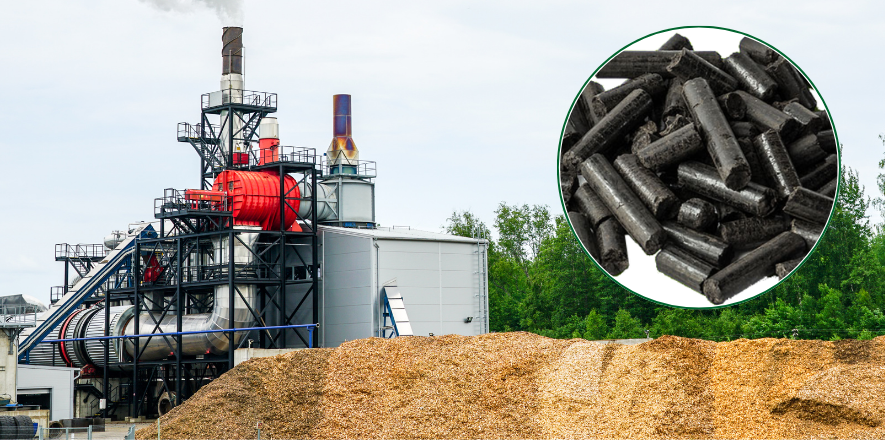
Wood Pellets vs. Torrefied Pellets: What’s the Difference?
The energy transition is accelerating, and pellet producers are at a crossroads.
The global energy sector is undergoing one of the most significant transformations in its history. Following the G7 commitment to phase out unabated coal, utilities and thermal power producers are actively seeking renewable alternatives capable of replacing fossil fuels while maintaining operational reliability.
However, for most power producers, the challenge is not simply finding renewable fuel. The solution must also:
- Deliver performance comparable to coal
- Require minimal capital investment
- Avoid major operational disruptions
- Ensure reliable, long-term fuel supply
This is where torrefied pellets (also known as biocoal or black pellets) are gaining global momentum. Utilities are increasingly turning to biocoal for several clear operational and economic advantages, from coal-like performance to compatibility with existing infrastructure.
As demand from power producers and district heating operators continues to grow, wood pellet producers around the world are starting to evaluate a key strategic opportunity: How difficult is it to convert an existing wood pellet plant into a torrefied pellet plant?
The answer is far simpler than many producers expect. But first, it is important to understand the fundamental differences between these two products.
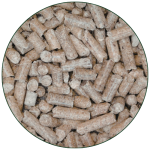
Wood pellets:
Traditional wood pellets are produced by compressing dried ground biomass (typically sawdust or wood chips) into dense cylindrical pellets. They are widely used for heating and power generation but still present limitations for coal replacement.
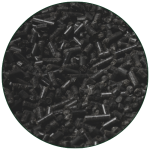
Torrefied pellets (biocoal, black pellets):
Torrefied pellets, often called biocoal or black pellets, undergo an additional thermal treatment known as torrefaction. During this process, biomass is heated in the absence of oxygen, causing moisture to evaporate and a percentage of the volatile compounds to be released. The resulting torrefied material is then densified into pellets (same as white pellets), producing a fuel with properties similar to coal
| Key differences include: | |
|---|---|
| Wood Pellets | Torrefied Pellets |
| Light brown | Black, coal-like |
| 3-5% co-firing ratio | Up to 100% co-firing ratio |
| Sensitive to moisture | Weather resistant |
|
Lower calorific value 16-17 MJ/kg |
Higher calorific value ≥19 MJ/kg |
| Difficult to grind in coal mills | Coal-like grindability |
| Self-heating hazard | Non-hazardous |
Because of these characteristics, torrefied pellets act as a drop-in replacement for coal in existing fossil coal infrastructure, making them highly attractive for utilities transitioning away from fossil fuels.
Safe for Employees, Communities, and Operations
Switching fuel in large thermal power plants typically involves major engineering challenges and significant capital expenditures. Torrefied pellets help solve this problem by offering a renewable fuel that behaves like coal.
Key advantages include:
- Coal-like combustion performance
- Compatibility with existing coal handling systems
- Low CAPEX due to minimal infrastructure modifications
- Flexible storage options (torrefied pellets can be stored outdoors)
- Reduced transportation costs due to higher energy density per ton
For utilities seeking a hassle-free transition away from fossil coal, torrefied pellets represent a practical and scalable solution. This is why many power producers are now looking beyond conventional pellets and toward biocoal as the next generation of renewable solid fuels.
Why Power Plants Are Turning to Torrefied Pellets
Safety is another critical factor driving the shift toward torrefied pellets. Conventional wood pellets can generate significant amounts of dust, increasing the risk of fires and explosions in storage silos and pellet handling systems. Dust emissions can also raise concerns for surrounding communities and negatively impact local air quality.
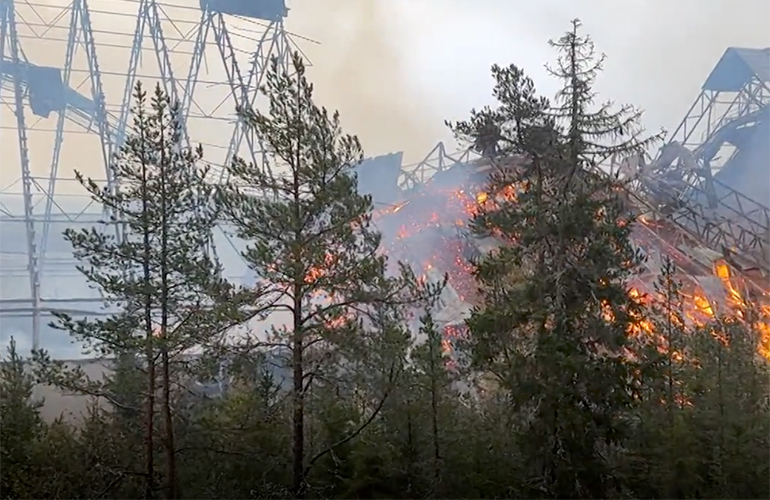
Several real-world incidents involving pellet storage facilities catching fire have been reported over the years. These events are often linked to the tendency of wood pellets to self-heat when exposed to humidity. Because wood pellets are hygroscopic, they can absorb moisture from the surrounding environment. This moisture can promote mold and microbial growth, which may degrade pellet quality and increase the risk of self-heating.
The bacterial activity associated with this degradation can lead to spontaneous combustion and the production of carbon monoxide. As a result, wood pellets stored in enclosed environments can release significant levels of carbon monoxide (CO). To mitigate these risks and protect employees’ health and safety, companies must install ventilated storage systems which is quite costly but absolutely necessary.
Furthermore, handling wood pellets also produces substantial airborne dust. Long-term exposure to this dust has been associated with respiratory issues and increased risks of nasal and sinus cavity cancer, requiring personal protective equipment (PPE) to ensure worker protection.
Together, these factors illustrate the operational, safety, and environmental challenges associated with storing and handling conventional wood pellets.
Torrefied pellets address many of these concerns because it:
- Does not generate dust
- Does not present a self-heating hazard
- Is safer and easier to store and transport
These characteristics contribute to safer working environments, reduced operational risks, and improved safety for nearby communities.
Converting a Pellet Plant: Easier Than You Think
So how difficult is it to convert an existing wood pellet plant into a torrefied pellet plant? In many cases, the transition is surprisingly straightforward. Below is a brief overview of a typical wood pellet production process compared with a torrefied pellet production process.
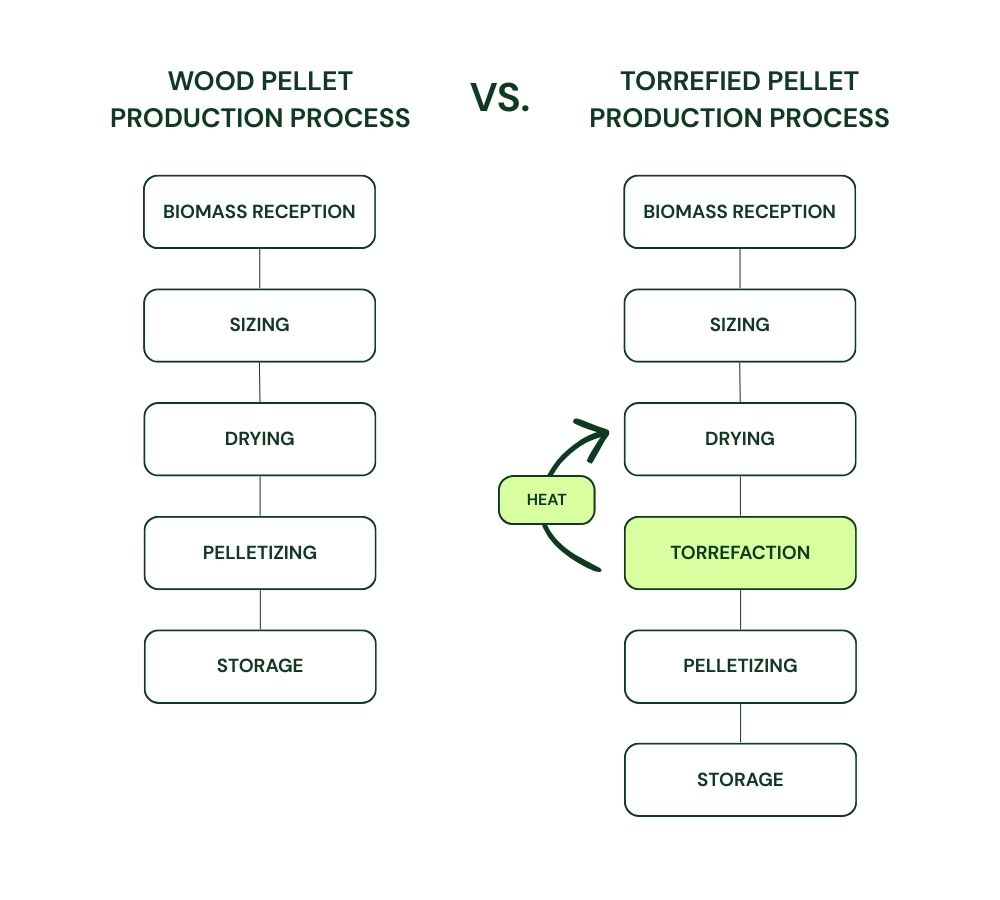
One of the most compelling aspects of torrefied pellet production is that existing pellet plants do not need to be rebuilt from the ground up.
In most cases, facilities can retain their core infrastructure, including:
- Biomass reception systems
- Grinding and sizing equipment
- Drying systems
- Pellet mills
- Storage infrastructure
As shown in the illustration above, the main addition is the CarbonFX torrefaction unit, which integrates directly into the existing production line. This modification allows producers to upgrade their production from conventional pellets to high-value biocoal without replacing their entire facility.
Another important advantage is flexibility. Plants can:
- Fully convert to torrefied pellet production, or
- Partially convert, directing only a portion of their production through the torrefaction unit.
- Come back to white pellet anytime
This allows producers to manufacture both wood pellets and torrefied pellets simultaneously, enabling a gradual transition with minimal investment.
Lower Drying Energy Requirements
Integrating a torrefaction unit can also significantly improve plant energy efficiency. Because torrefaction removes moisture and volatile compounds from biomass, the upstream drying requirements are reduced. In addition, the torrefaction process generates excess thermal energy, which can be recovered and reused to support the drying stage (see illustration above).
This energy integration allows pellet producers to reduce the fuel consumption required for the drying stage. In other words, the torrefaction unit can partially power the drying process itself, lowering utility costs while improving the overall energy efficiency of the plant.
Seamless Integration with Existing Throughput
Our biocoal solution, powered by our torrefaction technology CarbonFX, is designed to match the throughput of existing pellet plants, allowing producers to upgrade their production without sacrificing capacity. This means operators can maintain their existing feedstock handling systems, pelletizing equipment, and most of the plant’s core infrastructure, ensuring a smooth integration into current operations.
A Strategic Upgrade for Wood Pellet Producers
As global energy systems move away from fossil coal, torrefied pellets are emerging as one of the most promising renewable fuel for large-scale decarbonization. For pellet producers, converting an existing facility into a torrefied pellet plant offers a compelling strategic opportunity:
- Minimal investment required
- Lower operational energy costs
- Production of a higher-value fuel
- Improved safety and storage characteristics
- Access to a rapidly growing global biocoal market
With Airex Energy’s torrefaction technology, the transition from conventional wood pellets to torrefied pellets is far simpler, and far more profitable, than many producers realize.
Ready to Explore the Opportunity?
If you are a wood pellet producer looking to future-proof your operations and access the growing biocoal market, our team can help.
Head Office
2500 Bernard-Lefebvre Street
Laval, Québec, Canada, H7C 0A5
450.328.3864