
5 Proven Benefits of Adding Biochar During Composting
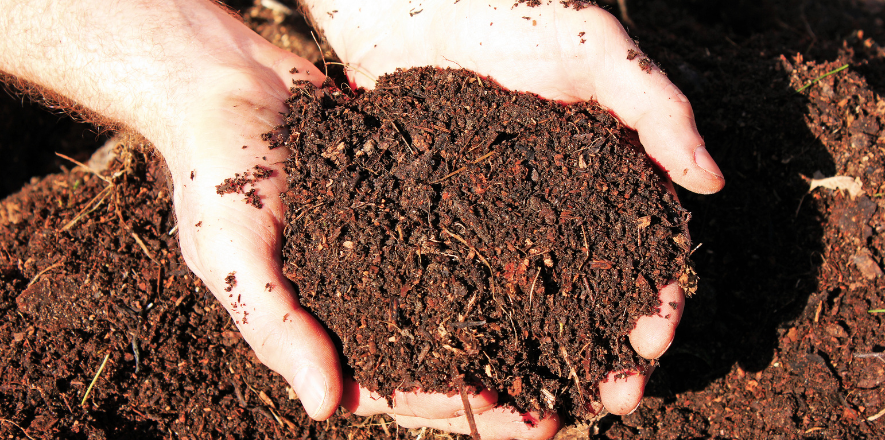
As compost producers seek to always improve product quality, operational efficiency, and environmental impact, integrating biochar directly into the composting process has become a transformative innovation, generating economic returns for producers and delivering superior soil performance for end users.
Rather than blending biochar into finished compost, adding it at the start of the composting process (known as biochar-composting) creates synergistic biological and chemical interactions that improve both process performance and final compost quality.
Here are five key benefits of incorporating biochar during composting.
1) Accelerates the Composting Process
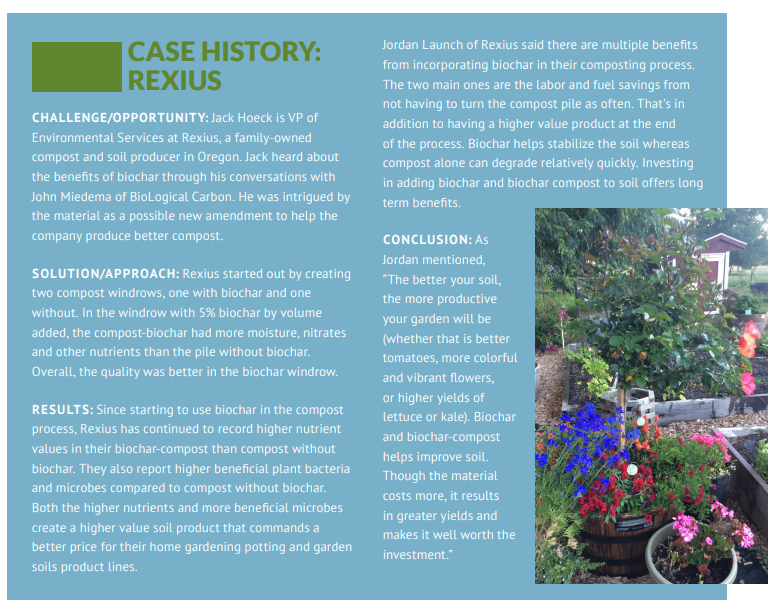
One of the most immediate operational benefits of biochar addition is faster compost stabilization. Biochar’s highly porous structure improves oxygen diffusion and provides habitat for microorganisms. This stimulates microbial activity, leading to:
- Higher tolerance to warm temperatures
- More rapid organic matter degradation
- Shorter overall composting cycles
Practical experience summarized by the American Biochar Institute (formely the United States Biochar Initiative: USBI) shows that adding 5–10% biochar (by volume) at the start of composting can reduce composting time by approximately 20%
For operators, this means:
- Increased production throughput
- Reduced turning frequency
- Lower fuel and labor costs
- Improved process control
2) Minimizes Odors and Maximizes Community Acceptance
Odor emissions such as ammonia (NH₃) and hydrogen sulfide (H₂S) generated during composting represent a significant challenge, impacting community acceptance, environmental quality, and human health. Integrating biochar into the composting process has been shown to effectively mitigate these emissions by improving key physicochemical parameters, including temperature, moisture balance, and pH.
Thanks to its highly porous structure and surface functional groups, biochar can adsorb volatile compounds and limit their release into the atmosphere. As a result, compost piles amended with biochar tend to maintain higher temperatures for longer periods, reduce ammonia emissions, and accelerate organic matter decomposition. This leads to a safer, more stable, and more mature final product, with lower levels of odors, heavy metals, and harmful pathogens.
3) Retains Nutrients While Improving Aeration and Structure
Maintaining optimal composting conditions requires both efficient nutrient retention and proper aeration. However, dense and high-moisture feedstocks, such as manure, can lead to compaction, anaerobic zones, and significant nitrogen losses through ammonia volatilization. These challenges not only reduce fertilizer value but also contribute to odor issues.
Biochar addresses both aspects simultaneously through its unique porous structure. It enhances physical structure while improving nutrient conservation by:
- Adsorbing ammonium (NH₄⁺) onto its surface
- Reducing ammonia (NH₃) volatilization
- Improving airflow
- Enhancing microbial activity and immobilization
- Stabilizing the compost matrix
Research summarized by the International Biochar Initiative shows that a 20% biochar addition (mass basis) to poultry litter reduced ammonia emissions by up to 64% and nitrogen losses by up to 52%, without negatively affecting the composting process. In parallel, improved aeration reduces anaerobic conditions, further limiting nitrogen loss and supporting efficient decomposition.
From a structural standpoint, biochar acts as an effective bulking agent. For example, adding 3% biochar made from woody residues to poultry manure significantly reduced lump formation, resulting in better pile structure and more consistent processing conditions.
These combined effects lead to:
- More uniform temperature distribution
- Greater process stability
- Higher nutrient retention
- Improved overall compost quality
The result is a more stable, nutrient-dense compost with enhanced agronomic value which demonstrates how biochar simultaneously optimizes both the physical and chemical performance of the composting process.
4) Reduces Greenhouse Gas Emissions
Composting emits methane (CH₄), nitrous oxide (N₂O), and ammonia (NH₃), particularly in high-moisture or poorly aerated systems.
Research cited in the IBI summarized report shows that by adding biochar at 3% (mass basis) to a pig manure, wood chips, and sawdust compost mixture was found to reduce N2O emissions by 26%.
Biochar contributes to emission reduction by:
- Adsorbing volatile compounds
- Improving oxygen diffusion
- Modifying microbial pathways
Because ammonia is a major contributor to odor complaints, biochar addition also supports improved community acceptance of composting operations. Lower emissions mean better environmental performance and easier regulatory compliance.
5) Immobilizes Heavy Metals and Improves Environmental Stability
Beyond process performance, biochar-composting offers important environmental protection benefits such as heavy metal stabilization. This benefit is particularly important when composting feedstocks that may contain contaminants.
These mechanisms immobilize heavy metals and reduce their environmental mobility, contributing to safer, more stable compost products.
- 5–10% biochar (volume basis) is typically optimal for composting
- Rates above 20–30% (mass basis) are not recommended, as excessive biochar may interfere with biodegradation
From Compost to Premium Compost
When biochar is added during composting, it becomes biologically “charged” with nutrients while maintaining its stable carbon structure.
The resulting premium compost offers:
- Faster production cycles
- Higher nitrogen retention
- Reduced greenhouse gas emissions
- Improved odor control
- Superior structure and stability
- Enhanced heavy metal immobilization
- Increased agronomic performance
For compost producers looking to differentiate their product and strengthen environmental performance, integrating biochar is not simply an additive, it is a process upgrade grounded in science.
References
- Biochar in compost. Improve compost and save money, Published by: USBI in partnership with Nebraska Forest Service. https://airex-energy.com/wp-content/uploads/2026/02/USBI_DFB_Compost-sheet_DIGITAL2.pdf
- The Use of Biochar in Composting, by Marta Camps, Massey University; and Thayer Tomlinson, International Biochar Initiative February 2015; https://airex-energy.com/wp-content/uploads/2026/02/Compost_biochar_IBI_final.pdf
- Guangpeng et al. Journal of Environmental Management Volume 392, September 2025, 126810 https://www.sciencedirect.com/science/article/abs/pii/S0301479725027860
- A. Sanchez-Monederoa, M.L. Cayuelaa, A. Roiga, K. Jindob, C. Mondinic, N. Boland. 2018. Role of biochar as an additive in organic waste composting. Bioresource Technology. 247(1154-1164). https://pubmed.ncbi.nlm.nih. gov/29054556/
- Gang, D.R., Collins, D., Jobson, T.B., Seefeldt, S., Berim, A., Stacey, N., Khosravi, N., & Hoashi-Erhardt, W. (2019). Integrating Compost and Biochar for Improved Air Quality, Crop Yield, and Soil Health. http://s3-us-west-2. amazonaws.com/wp2.cahnrs.wsu.edu/wp-content/uploads/ sites/32/2019/12/Integrating-Compost-and-Biochar-.pdf
- João A. Antonangelo, Xiao Sun, Hailin Zhang. The roles of co-composted biochar (COMBI) in improving soil quality, crop productivity, and toxic metal amelioration. Journal of Environmental Management
- Camps, M. and T. Tomlinson. 2015. The Use of Biochar in Compost. International Biochar Inititiative. https://www. biochar-international.org/wpcontent/uploads/2018/04/ Compost_biochar_IBI_final.pdf
- Sánchez-García, M., Albuquerque, J.A., Sánchez-Monedero, M.A., Roig, A., Cayuela, M.L., 2015. Biochar accelerates organic matter degradation and enhances N mineralization during composting of poultry manure without a relevant impact on gas emissions. Bioresource Technology. 192, 272–279. https://pubmed.ncbi.nlm.nih.gov/26038333/
- L., 2015. Biochar accelerates organic matter degradation and enhances N mineralization during composting of poultry manure without a relevant impact on gas emissions. Bioresource Technology. 192, 272–279. https://pubmed.ncbi. nlm.nih.gov/26038333/
- Advancing Organics Management i.n Washington State: The Waste to Fuels Technology Partnership 2019-2021 Biennium. 2022. Washington State Department of Ecology. Publication 22-07-002.
- Pacific Biochar. 2021. https://pacificbiochar.com/vineyardfield-trial-with-biochar-and-compost_-3rd-harvest-report/
- International Biochar Initiative (IBI) (2014a). Standardized Product Definition and Product Testing Guidelines for Biochar That Is Used in Soil; accessed at http://www.biochar‐org/sites/default/files/IBI_Biochar_Standards_V2%200_final_2014.pdf
- Gajalakshmi, S.; Abbasi, S. A. (2008). Solid Waste Management by Composting: State of the Art. Critical Reviews in Environmental Science and Technology. 38:311‐
- Jindo, K., Suto, K., Matsumoto, K., Garcia, C., Sonoki, T. and Sanchez‐Monedero, M.A. (2012). Chemical and biochemical characterization of biochar‐blended composts prepared from poultry manure. Bioresource Technology. 110:396‐
- Dias, B.O., Silva, C.A., Higashikawa, F.S., Roig, A. and Sánchez‐Monedero, M.A. (2010). Use of biochar as bulking agent for the composting of poultry manure: Effect on organic matter degradation and humification. Bioresource Technology. 47:1239‐
- Fischer, D. and Glaser, B. (2012). Synergism between compost and biochar for sustainable soil amelioration, management and organic waste, in S. Kumer (ed.), Management of Organic Wastes, In Tech, pp 167 – 198.
- Khan, N., Clark, I., Sánchez‐Monedero, M.A., Shea, S., Meier, S. and Bolan, N. (2013). Maturity indices in co‐composting with biochar. 2nd International Conference on Solid Waste 2013: Innovation in Technology and Management, Hong Kong.
- Zhang, Lu, and Sun Xiangyang (2014). Changes in physical, chemical, and microbiological properties during the two‐stage co‐composting of green waste with spent mushroom compost and biochar. Bioresource Technology. 171:274 – 284.
- Wang, C., Lu, H., Dong, D., Deng, H., Strong, P.J., Wang, H. and Wu, W. (2013). Insight into the Effects of Biochar on Manure Composting: Evidence Supporting the Relationship between N2O Emissions and Denitrifying Community. Environmental Science & Technology. 47:7341‐
- Sonoki, T., Furukawa, T., Jindo, K., Suto, K., Aoyama, M. and Sánchez‐Monedero, M.A. (2012). Influence of biochar addition on methane metabolism during thermophilic phase in composting. Journal of Basic Microbiology. 52:1‐
- Lopez‐Cano, I., Roig, A., Cayuela, M.L., Alburquerque, J.A., Sanchez‐Monedero, M.A. (2015). Biochar impact on olive mill waste composting. Proceedings of the III International Symposium on Organic Matter Management and Compost Use in Horticulture. Murcia, Spain.
- Steiner, C., Das, K.C., Melear, N. and Lakely, D. (2010) Reducing Nitrogen Loss During Poultry Litter Composting Using Biochar. Journal of Environmental Quality. 39:1236‐
- Steiner, C., Melear, N., Harris, K. and Das, K.C. (2011). Biochar as bulking agent for poultry litter composting. Carbon Management. 2:227‐
- Sánchez‐García, M., Alburquerque, J.A., Sánchez‐Monedero, M.A., Roig, A., Cayuela, M.L. (2015). Biochar accelerates organic matter degradation and enhances N mineralisation during composting of poultry manure without a relevant impact on gas emissions. Bioresource Technology 192, 272‐
- International Biochar Initiative (IBI) (2014b). 2013 State of the Biochar Industry; accessed at http://www.biochar‐org/sites/default/files/State_of_the_Biochar_Industry_2013.pdf
Nguyen MK, Lin C, Hoang HG, Bui XT, Ngo HH, Le VG, Tran HT. Investigation of biochar amendments on odor reduction and their characteristics during food waste co-composting. Sci Total Environ. 2023 Mar 20;865:161128. doi: 10.1016/j.scitotenv.2022.161128. Epub 2022 Dec 29. PMID: 36587674. <https://pubmed.ncbi.nlm.nih.gov/36587674/>
Sobal, Ł., & Dyjakon, A. (2022). Biochar as a sustainable product for the removal of odor emissions – Mini literature review. Revista de Chimie, 73(4), 8557. https://doi.org/10.37358/RC.22.4.8557