Biocoal: The Best Feedstock for Biofuel Production
From local residues to global fuels
We use torrefaction to convert organic residues into biocoal, an energy-dense, carbon-rich feedstock perfect for the production of advanced biofuels such as SAF, bio-methanol, and green hydrogen.
Produced from local, non-food biomass, biocoal secures energy independence and delivers reliable, scalable low-carbon fuel production.
Biocoal is an ideal feedstock for bio-methanol production due to its high carbon content, uniform composition, and low moisture levels. It can be efficiently converted via gasification into syngas (a key intermediate for methanol synthesis) enabling higher carbon conversion and improved fuel yields.
Its consistent quality and energy density support more stable, scalable, and cost-effective bio-methanol production compared to raw biomass, while leveraging renewable, locally sourced feedstocks.
SAF
For Sustainable Aviation Fuel (SAF), feedstock quality is critical to achieve high conversion efficiency and fuel performance. With its high carbon content, low moisture, and homogeneous properties, torrefied pellets are particularly well suited for thermochemical pathways such as gasification and Fischer–Tropsch synthesis.
Their stability and energy density support reliable, scalable SAF production from renewable, locally sourced biomass.
Green hydrogen
The growth of green hydrogen depends on access to renewable and reliable feedstocks. Biocoal meets this need by converting biomass residues into a standardized, energy-dense resource that supports industrial hydrogen production.
Its consistent quality makes it an ideal input for gasification, supporting efficient and scalable hydrogen generation.
The Advantage of Biocoal in Biofuel Production
Sourced from Non-Food Biomass
No competition with food resources
Easy Pulverization
Pulverization into fine particles ≤ 100µm
Safe to Transport Worldwide
Non-hazardous material
Easy Pneumatic Conveying
Perfect spherical particle shape
High Energy Density
More energy density than raw biomass
Weather resistant
Can be stored outside just like coal
The Biocoal Solution
Converting biomass residues into biocoal to meet biofuel demand
It delivers consistent, high-quality output across diverse feedstocks while meeting demanding energy, HGI, ash and bulk density requirements.
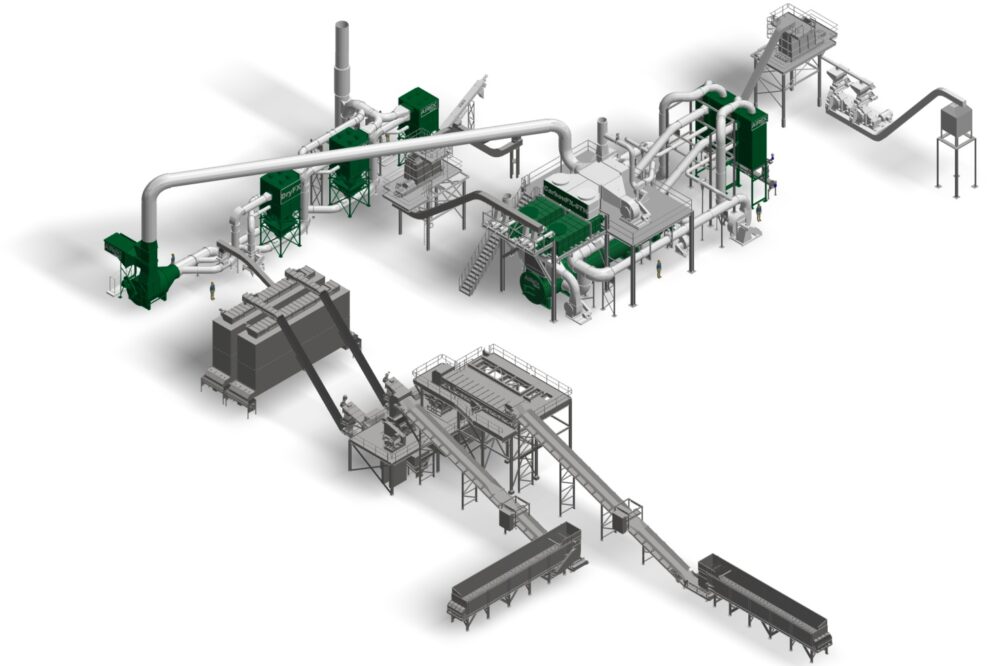
With superior efficiency and a modular, globally deployable architecture, CarbonFX™ empowers the energy industry to transition away from fossil coal at scale.